
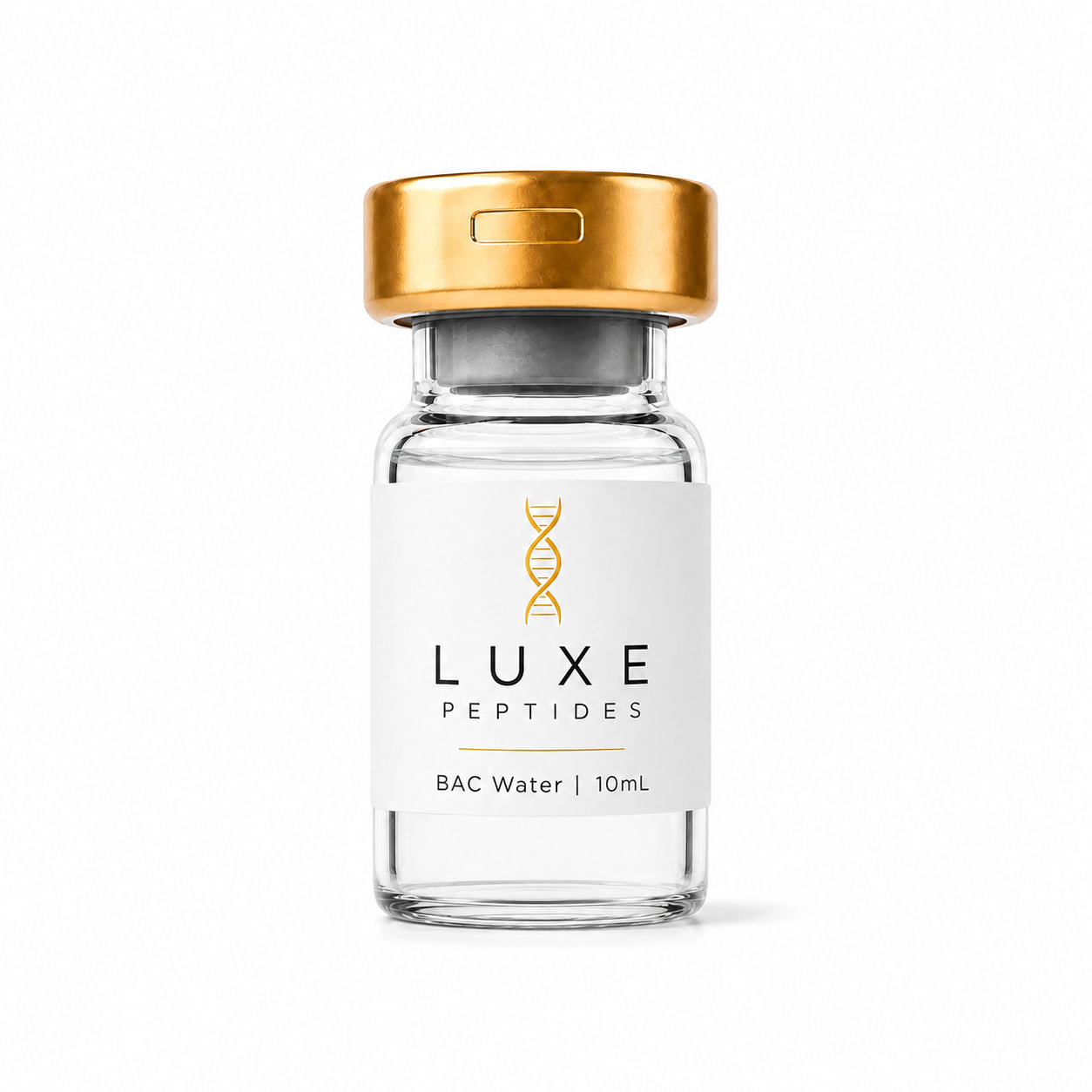
Bacteriostatic Water 10 mL: Essential Guide to Laboratory Research and Preparation
What Is Bacteriostatic Water 10 mL?
Bacteriostatic Water 10 mL is a sterile aqueous solution formulated with a bacteriostatic preservative intended to inhibit bacterial growth under specified conditions. It is used in certain laboratory, pharmaceutical, and research contexts where an aqueous solution with a microbial growth-inhibiting preservative is required.
Unlike plain sterile water, bacteriostatic water contains an additional preservative ingredient. A commonly used preservative is benzyl alcohol, although the exact formulation and concentration should always be confirmed using the product label and manufacturer documentation.
The 10 mL vial format provides a compact container for laboratory inventory and research preparation workflows. Its purpose and suitability depend on the formulation, intended application, and applicable laboratory protocols.
For researchers reviewing laboratory preparation materials, understanding the distinction between bacteriostatic water and other sterile aqueous solutions is important. You can explore the product range at Luxe Peptides for additional research-related materials and product information.
Bacteriostatic Water 10 mL: Understanding Its Composition
The defining characteristic of bacteriostatic water is the inclusion of a preservative designed to limit bacterial proliferation.
Its basic formulation generally includes:
- Sterile water: The aqueous base of the solution.
- Bacteriostatic preservative: An ingredient intended to inhibit bacterial growth.
- 10 mL vial: A compact container size for storage and laboratory inventory.
Benzyl alcohol is used as a bacteriostatic preservative in certain commercially available formulations. However, not every product should be assumed to have the same composition. Researchers should consult the product’s specifications, label, and safety documentation rather than relying on a general description.
The preservative is not a substitute for proper sterile handling, contamination control, or validated laboratory procedures.
How Does Bacteriostatic Water Differ From Sterile Water?
Although the terms are sometimes used interchangeably in informal discussions, bacteriostatic water and sterile water are not identical.
Their primary difference is the presence or absence of a bacteriostatic preservative.
| Characteristic | Bacteriostatic Water | Sterile Water |
|---|---|---|
| Water base | Yes | Yes |
| Bacteriostatic preservative | Formulated with one | Generally absent |
| Microbial growth inhibition | Preservative is intended to inhibit bacterial growth | No preservative-based inhibition |
| Formulation | Depends on manufacturer | Depends on product specification |
| Intended application | Specific applications where the formulation is appropriate | Applications requiring the corresponding sterile water specification |
An important distinction is that bacteriostatic water does not remain protected against every form of contamination. Its preservative does not make a vial permanently sterile after opening, nor does it eliminate the need for appropriate handling.
The two products should not be substituted for one another without confirming that the relevant research protocol or product specification permits the substitution.
The Role of Benzyl Alcohol as a Preservative
Benzyl alcohol is an organic compound used in various pharmaceutical and laboratory formulations. In certain aqueous preparations, it serves as a preservative intended to restrict bacterial growth.
Its antimicrobial properties are associated with its ability to interfere with microbial cellular processes. The effectiveness of a preservative depends on several factors, including its concentration, the formulation’s characteristics, and the microorganisms involved.
However, a bacteriostatic preservative should not be confused with a sterilizing agent.
There are important differences:
- Bacteriostatic: Restricts or inhibits bacterial growth.
- Bactericidal: Kills bacteria.
- Sterilization: A validated process designed to eliminate viable microorganisms, including resistant forms.
These terms describe different mechanisms and should not be used interchangeably.
The presence of a preservative also does not guarantee that a product will remain free from contamination following improper handling or storage.
Why Is Bacteriostatic Water Used in Research Environments?
Bacteriostatic water is relevant to certain research and preparation environments because some protocols specify an aqueous solution containing a bacteriostatic preservative.
Potential areas of relevance include:
1. Laboratory Preparation
Research laboratories work with different aqueous formulations depending on the properties of the materials being studied.
The characteristics of the water, including the presence of preservatives and other formulation components, can influence whether a solution is appropriate for a particular experiment.
2. Formulation Research
Researchers investigating aqueous formulations may examine how different ingredients interact within a solution.
Preservatives are one consideration in formulation research because they can influence microbial stability and may also affect compatibility with other components.
3. Pharmaceutical Research
Preservative systems are studied as part of pharmaceutical formulation development. Their purpose, concentration, and compatibility must be evaluated in relation to the intended product and its specifications.
Bacteriostatic water is not automatically appropriate for every pharmaceutical or laboratory application. Its use depends on the requirements of the relevant formulation and validated procedures.
Understanding the 10 mL Vial Format
The 10 mL format describes the nominal volume of the product’s container. It provides a compact option for product storage, identification, and laboratory inventory management.
For research settings, clearly labeled containers can help with material identification and documentation.
When evaluating a 10 mL bacteriostatic water product, consider:
- The stated volume and formulation.
- The preservative ingredient and concentration.
- Manufacturer-provided product specifications.
- Lot number and expiration information.
- Storage conditions listed on the label.
- Relevant safety and handling documentation.
These details are more useful for evaluating a product than relying on vial size alone.
Important Research and Handling Considerations
The presence of a bacteriostatic preservative does not remove the need for appropriate laboratory controls.
Researchers should consider the following:
Product compatibility: Preservatives may affect certain experimental materials. Compatibility must be established through appropriate research documentation and protocols.
Contamination control: A bacteriostatic formulation is not a guarantee against contamination. Proper laboratory procedures remain necessary.
Storage requirements: Follow the manufacturer’s specified storage conditions. Do not assume that every formulation has identical storage requirements.
Product identification: Verify the ingredient list, concentration, batch information, and product documentation.
Research limitations: A product description does not establish suitability for a particular experiment, compound, or biological application.
For these reasons, product specifications and relevant laboratory procedures should take precedence over generalized recommendations.
Bacteriostatic Water 10 mL vs. Other Laboratory Water Products
Several types of water are used in scientific and laboratory environments. Their differences relate to purity, processing, additives, and intended applications.
Some commonly encountered categories include:
- Sterile Water: Water processed and packaged to meet a specified sterility standard, generally without a bacteriostatic preservative.
- Bacteriostatic Water: A sterile aqueous formulation containing a preservative intended to inhibit bacterial growth.
- Purified Water: Water processed to meet defined chemical and purity requirements; it is not necessarily sterile.
- Water for Injection: A pharmaceutical-grade water specification subject to strict requirements, with the exact product form and permitted use determined by its labeling and applicable standards.
These categories are not interchangeable. A product’s suitability depends on its documented specifications and the requirements of the application.
Frequently Asked Questions About Bacteriostatic Water 10 mL
What is Bacteriostatic Water 10 mL?
Bacteriostatic Water 10 mL is a sterile aqueous solution formulated with a bacteriostatic preservative intended to inhibit bacterial growth. The 10 mL designation refers to the nominal volume of the vial.
Does bacteriostatic water contain benzyl alcohol?
Some commercially available formulations contain benzyl alcohol as a preservative. However, the exact composition and concentration should always be verified using the manufacturer’s label and product documentation.
Is bacteriostatic water the same as sterile water?
No. Bacteriostatic water contains a preservative, while sterile water generally does not. Their intended applications and specifications differ.
Does bacteriostatic water prevent all contamination?
No. A bacteriostatic preservative is intended to inhibit bacterial growth, but it does not guarantee protection against all microorganisms or improper handling.
Why is the 10 mL format used?
The 10 mL format is a compact container size that can be useful for laboratory inventory and research material identification. The appropriate product format depends on the requirements of the research environment.
Can bacteriostatic water be used with every research compound?
No. Compatibility varies between compounds and formulations. The presence of a preservative may affect certain materials or experimental results. Researchers should consult validated protocols and product specifications.
Where can I find Bacteriostatic Water 10 mL product information?
Refer to the product listing and manufacturer documentation for details about composition, packaging, and intended research applications. Visit Luxe Peptides for additional product information.
Explore More Research Products at Luxe Peptides
Researchers examining aqueous formulations and related laboratory materials may also be interested in exploring other products in the Luxe Peptides catalog, subject to availability and their respective product specifications.
Related research products include:
- Acetic Acid Water 3mL: An aqueous acid solution with a different chemical composition and intended applications.
- DSIP 10mg: A peptide discussed in research involving sleep-related physiology.
- Pinealon 10mg: A peptide investigated in experimental research involving neurological and cellular processes.
- Selank: A synthetic peptide studied in relation to neurobiological processes.
- Semax: A synthetic peptide examined in experimental neuroscience research.
These products have different properties and are not substitutes for bacteriostatic water.
Explore the Luxe Peptides website for current product listings and additional research-related information.
Final Thoughts on Bacteriostatic Water 10 mL
Bacteriostatic Water 10 mL is a sterile aqueous formulation containing a preservative intended to limit bacterial growth. Its defining feature is the distinction between preservative-containing water and other sterile or purified water products.
Understanding its composition, preservative characteristics, product specifications, and limitations is important when evaluating laboratory preparation materials.
For research environments, product compatibility, documentation, and established laboratory procedures should always guide material selection. The presence of a bacteriostatic preservative should never be treated as a replacement for appropriate contamination controls.
For research purposes only. Not for human consumption.