
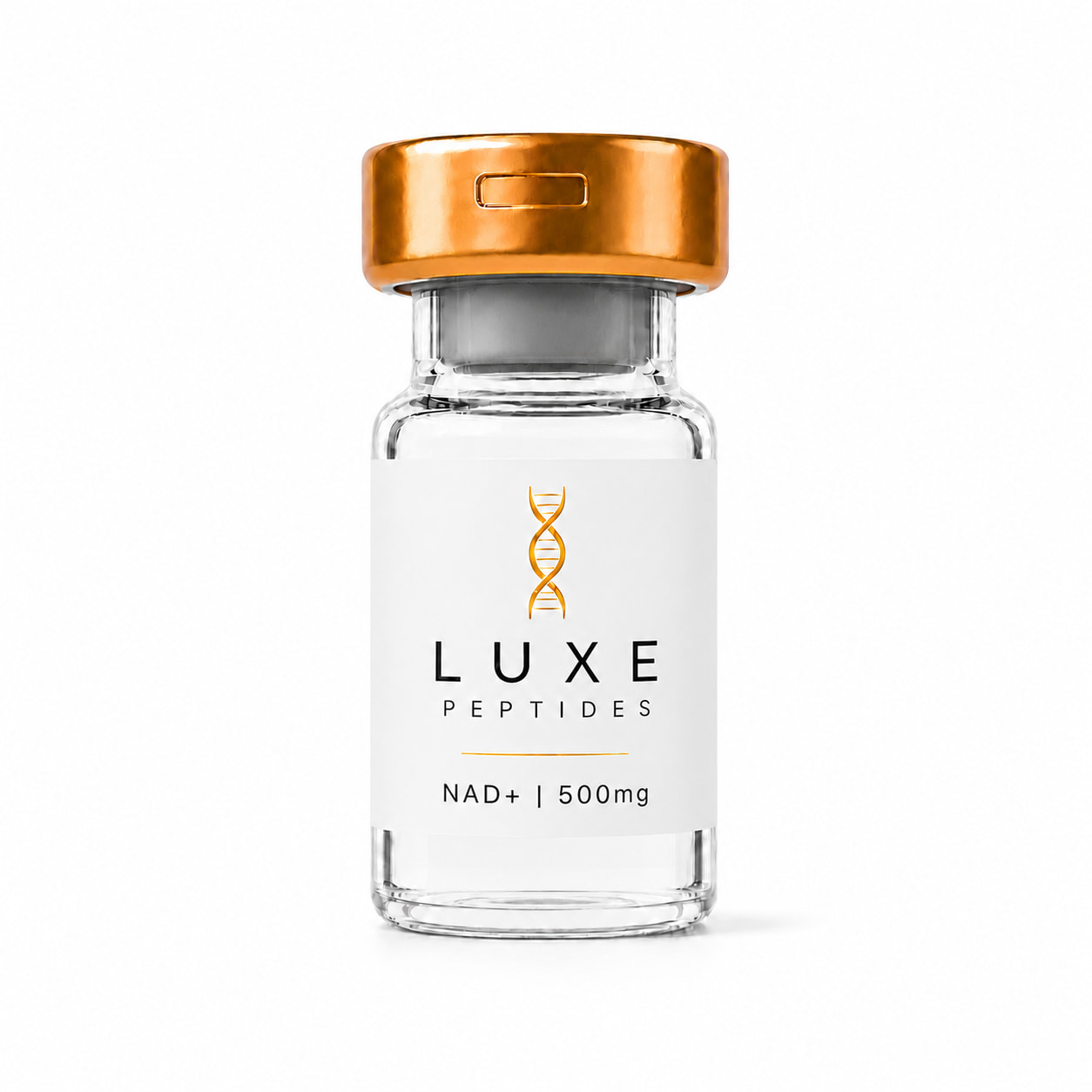
What Is NAD+ 500mg?
NAD+ (nicotinamide adenine dinucleotide) is a naturally occurring coenzyme found in virtually every living cell. It plays an essential role in cellular metabolism by helping transfer electrons during biochemical reactions. These processes support the conversion of nutrients into usable cellular energy and help maintain metabolic balance.
NAD+ 500mg is a research-grade compound intended for laboratory investigation of NAD+ biology. Researchers study its involvement in energy metabolism, mitochondrial activity, redox reactions, and several enzyme-driven cellular pathways.
Unlike many biological molecules that serve a single function, NAD+ participates in numerous interconnected processes. Its oxidized form, NAD+, accepts electrons during metabolic reactions and becomes NADH. NADH can subsequently donate those electrons to other biochemical reactions, including processes associated with mitochondrial ATP production.
This relationship makes NAD+ an important subject in studies involving cellular energy production and metabolic regulation.
NAD+ 500mg and Cellular Energy Production
One of the most extensively studied functions of NAD+ is its involvement in cellular energy metabolism.
Cells rely on multiple biochemical pathways to convert nutrients into energy. These include glycolysis, the citric acid cycle (Krebs cycle), and oxidative phosphorylation. NAD+ participates in several of these pathways by accepting electrons and supporting the reactions that keep cellular metabolism functioning.
During glycolysis and the citric acid cycle, NAD+ is converted into NADH. The resulting NADH carries high-energy electrons toward the mitochondrial electron transport chain, where they contribute to processes involved in ATP synthesis.
Research into NAD+ therefore provides insight into how cells regulate energy production and maintain metabolic activity.
NAD+ 500mg and Mitochondrial Function
Mitochondria are specialized cellular structures responsible for much of the energy production required by eukaryotic cells.
NAD+ is closely connected to mitochondrial metabolism because its redox relationship with NADH helps support reactions within the citric acid cycle and oxidative phosphorylation.
Researchers investigate NAD+ in relation to:
- Mitochondrial energy metabolism
- Electron transport chain activity
- Cellular ATP production
- Mitochondrial redox balance
- Metabolic responses to cellular stress
The relationship between NAD+ metabolism and mitochondrial activity is also an important area of investigation in aging-related research.
NAD+ 500mg in DNA Repair and Cellular Signaling
Beyond energy metabolism, NAD+ serves as a substrate for several enzyme families involved in cellular signaling and genomic maintenance.
Two important examples are sirtuins and poly(ADP-ribose) polymerases (PARPs).
Sirtuins: These NAD+-dependent enzymes participate in processes involving protein modification, metabolic regulation, gene expression, and cellular stress responses.
PARPs: These enzymes use NAD+ during ADP-ribosylation, a process involved in cellular signaling and responses to DNA damage.
Because these enzyme families depend on NAD+ availability, researchers examine how changes in NAD+ metabolism influence cellular responses and DNA-maintenance pathways.
These mechanisms make NAD+ particularly relevant to molecular biology and cellular aging studies.
NAD+ 500mg and Cellular Aging Research
NAD+ metabolism has become an important subject in research examining biological aging.
Studies have investigated how NAD+ availability changes with age and how these changes relate to mitochondrial activity, cellular stress responses, DNA repair, and metabolic regulation.
Researchers are particularly interested in the relationship between NAD+ and cellular resilience, including the mechanisms that help cells respond to environmental and metabolic stress.
However, the relationship between NAD+ levels and aging is complex. Findings from laboratory models do not automatically establish health or longevity benefits in humans.
Ongoing research continues to investigate the biological mechanisms connecting NAD+ metabolism with age-associated cellular changes.
Why Is NAD+ Studied in Laboratory Research?
NAD+ offers researchers an opportunity to investigate several interconnected biological pathways using a single coenzyme.
Common research areas include:
- Cellular energy metabolism: Investigating the biochemical reactions involved in ATP production.
- Mitochondrial function: Examining NAD+-dependent metabolic processes within mitochondria.
- Redox biology: Studying the balance between oxidized NAD+ and reduced NADH.
- DNA repair: Investigating NAD+-dependent enzymes involved in genomic maintenance.
- Cellular signaling: Examining the activities of sirtuins, PARPs, and other NAD+-dependent enzymes.
- Aging biology: Exploring how NAD+ metabolism relates to cellular aging and stress responses.
These research applications help expand scientific understanding of the role of NAD+ in cellular biology.
NAD+ 500mg Product Specifications
| Product Detail | Information |
|---|---|
| Product Name | NAD+ |
| Quantity | 500mg per vial |
| Compound | Nicotinamide Adenine Dinucleotide |
| Category | Research-grade compound |
| Research Focus | Cellular metabolism and mitochondrial function |
| Intended Application | Laboratory research |
NAD+ 500mg is intended for controlled laboratory research and investigation of NAD+-related biochemical pathways.
For additional information about research compounds, visit LuxePeptides.
Further Scientific Reading on NAD+ Research
The following publications provide additional scientific background on NAD+ metabolism and its biological functions:
- NAD+ Metabolism and Its Roles in Cellular Processes During Ageing – Nature Reviews Molecular Cell Biology
- Role of NAD+ in Regulating Cellular and Metabolic Signaling Pathways – PMC
- Fueling Genome Maintenance: On the Versatile Roles of NAD+ in Preserving DNA Integrity – PMC
- NAD+ Regulates Nucleotide Metabolism and Genomic DNA Replication – Nature Cell Biology
- The Role of NAD+ Metabolism and Its Modulation of Mitochondria in Aging and Disease – 2025
Explore Related Research Compounds
Researchers exploring cellular metabolism, mitochondrial activity, and related biological pathways may also be interested in:
- NAD+ Precursors: NMN and NR
- MOTS-C: Studied in mitochondrial-derived signaling research.
- AICAR 50mg: Investigated in cellular energy metabolism and AMPK-related research.
- 5-Amino-1MQ 10mg: Studied in relation to NNMT and cellular metabolic pathways.
- SS-31: Investigated in mitochondrial biology and cellular research.
Research Disclaimer: NAD+ 500mg is intended strictly for laboratory research purposes. It is not intended for human or veterinary consumption, diagnosis, treatment, or prevention of any disease.