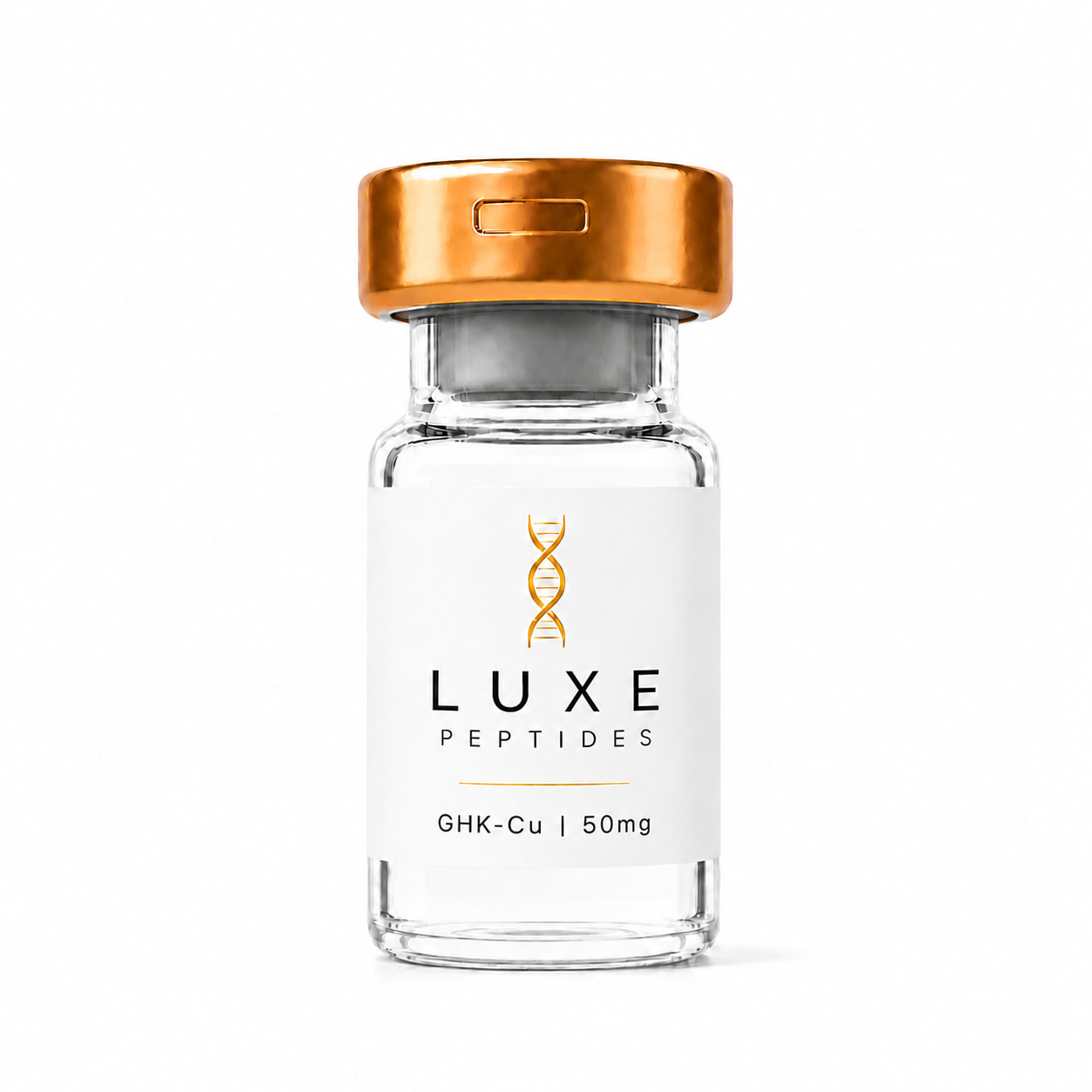
GHK-Cu 50 mg Full Information
GHK-Cu 50 mg is a naturally occurring copper-binding tripeptide composed of three amino acids: glycine, histidine, and lysine. Also known as glycyl-L-histidyl-L-lysine copper complex, it has attracted scientific interest because of its involvement in biological processes associated with tissue maintenance, extracellular-matrix regulation, and cellular signaling.
GHK-Cu 50 mg is a research-grade peptide intended for laboratory investigation. Researchers study its relationship with collagen-related pathways, wound-repair mechanisms, antioxidant activity, and tissue remodeling.
GHK-Cu is particularly interesting because it connects peptide signaling with copper-dependent biological activity. Copper is an essential trace element involved in numerous enzymes and cellular processes, including those associated with connective tissue formation and antioxidant defense.
The interaction between GHK and copper makes this peptide a subject of ongoing research in skin biology, regenerative processes, and cellular maintenance. [GHK-Cu 50 mg]
GHK-Cu 50 mg and Collagen-Related Research
Collagen is one of the primary structural proteins found in connective tissue. It contributes to the organization and mechanical properties of skin, tendons, ligaments, and other extracellular structures.
Researchers investigate GHK-Cu because of its reported interactions with biological pathways associated with collagen production and extracellular-matrix regulation. [GHK-Cu 50 mg]
The extracellular matrix (ECM) is a complex network of proteins and other molecules surrounding cells. It provides structural support while also participating in cellular communication and tissue organization.
Research involving GHK-Cu examines:
- Collagen-related gene expression
- Extracellular-matrix organization
- Fibroblast activity
- Connective-tissue signaling
- Cellular remodeling mechanisms
These areas make GHK-Cu relevant to laboratory studies examining the molecular processes involved in tissue structure and maintenance. [GHK-Cu 50 mg]
GHK-Cu 50mg in Wound-Repair and Tissue Remodeling Research
Wound repair involves several coordinated biological stages, including inflammation, cellular migration, tissue formation, and remodeling.
Different cell types participate in these processes, including fibroblasts, endothelial cells, and immune cells. [GHK-Cu 50 mg]
GHK-Cu has been investigated in experimental research involving cellular responses associated with tissue repair and remodeling.
Scientists are interested in its potential interactions with pathways involving:
- Fibroblast migration and activity
- Extracellular-matrix components
- Collagen-related signaling
- Inflammatory response pathways
- Tissue organization and remodeling
These mechanisms provide a foundation for studying how copper-binding peptides interact with biological systems involved in tissue maintenance.
Laboratory findings do not establish that a particular GHK-Cu formulation produces wound-healing benefits in humans. [GHK-Cu 50 mg]
GHK-Cu 50mg and Skin Biology Research
Skin is a complex biological organ consisting of multiple layers, specialized cells, connective tissue, and structural proteins.
Its maintenance involves continuous interactions between keratinocytes, fibroblasts, immune cells, and the extracellular matrix.
GHK-Cu has received attention in skin-related research because of its reported involvement in pathways associated with collagen regulation, cellular signaling, and tissue remodeling.
Research areas include: [GHK-Cu 50 mg]
Fibroblast signaling: Fibroblasts are important cells involved in maintaining connective tissue and producing extracellular-matrix components.
Collagen-related activity: Researchers examine molecular pathways associated with collagen production and matrix organization. [GHK-Cu 50 mg]
Cellular remodeling: Studies investigate how cells interact with and modify their surrounding extracellular environment.
Skin aging research: GHK-Cu is also discussed in experimental investigations involving age-associated changes in skin structure and cellular function.
These research interests help explain why GHK-Cu frequently appears in scientific discussions involving skin biology and regenerative signaling. [GHK-Cu 50 mg]
GHK-Cu 50mg and Antioxidant Pathways
Oxidative stress occurs when the production of reactive oxygen species exceeds the capacity of cellular antioxidant defenses.
Reactive oxygen species participate in normal cell signaling, but excessive oxidative activity can contribute to cellular damage.
Copper is involved in several important biological enzymes, including copper-zinc superoxide dismutase (Cu/Zn-SOD), which participates in antioxidant defense.
GHK-Cu 50 mg is studied in connection with antioxidant-related pathways and cellular responses to oxidative stress.
Researchers investigate its relationship with:
- Cellular redox balance [GHK-Cu 50 mg]
- Antioxidant enzyme activity
- Oxidative stress signaling
- Cellular maintenance pathways [GHK-Cu 50 mg]
- Copper-dependent biological processes
These areas are relevant to broader research into cellular resilience and tissue biology. [GHK-Cu 50 mg]
GHK-Cu 50mg and Regenerative Research
Regenerative biology examines how cells maintain, organize, and restore biological structures.
This field includes research into extracellular-matrix activity, cellular communication, tissue remodeling, and the molecular signals involved in maintaining normal tissue architecture.
GHK-Cu [GHK-Cu 50 mg] has attracted interest in this area because experimental research has identified interactions with multiple genes and biological pathways.
Its reported effects on gene expression have made it a subject of investigation in studies involving: [GHK-Cu 50 mg]
- Tissue maintenance
- Connective-tissue biology
- Cellular remodeling
- Inflammatory signaling
- Skin-related biological processes
- Age-associated cellular changes
However, regenerative research remains complex, and findings from cell cultures or animal models should not be interpreted as proof of clinical effectiveness. [GHK-Cu 50 mg]
Why Is GHK-Cu 50mg Studied in Laboratory Research?
GHK-Cu is an interesting research compound because its copper-binding structure connects peptide biology with several important cellular processes.
Researchers continue to examine its molecular interactions and potential relevance to tissue-related biological pathways. [GHK-Cu 50 mg]
Common research interests include:
- Collagen research: Investigating pathways involved in extracellular-matrix proteins and connective-tissue structure.
- Wound-repair research: Exploring cellular signaling associated with tissue maintenance and remodeling. [GHK-Cu 50 mg]
- Skin biology: Examining fibroblast activity and skin-related cellular processes.
- Antioxidant research: Investigating copper-dependent enzymes and oxidative balance.
- Regenerative biology: Studying cellular communication and extracellular-matrix organization. [GHK-Cu 50 mg]
- Aging research: Exploring molecular pathways associated with cellular maintenance and age-related changes.
GHK-Cu 50mg Product Specifications
| Product Detail | Information |
|---|---|
| Product Name | GHK-Cu |
| Quantity | 50mg per vial |
| Compound Type | Copper-binding tripeptide |
| Composition | Glycine, Histidine, Lysine, Copper |
| Category | Research-grade peptide |
| Research Focus | Tissue remodeling and cellular signaling |
| Intended Application | Laboratory research |
GHK-Cu 50mg is intended for controlled laboratory investigation of copper-binding peptide activity and related biological pathways.
For additional information about research compounds, visit LuxePeptides. [GHK-Cu 50 mg]
Scientific Research and Further Reading
The following publications provide additional scientific background on GHK-Cu and its biological properties:
- The Human Tripeptide GHK-Cu in the Treatment of Aged Skin, Regenerative and Protective Actions
https://pmc.ncbi.nlm.nih.gov/articles/PMC6073405/ - The Regenerative and Protective Actions of the GHK-Cu Peptide in the Light of the New Gene Data
https://pmc.ncbi.nlm.nih.gov/articles/PMC4508379/ - Copper and Its Role in Biological Systems
https://pmc.ncbi.nlm.nih.gov/articles/PMC3715561/ - The Role of Copper in Wound Healing
https://pmc.ncbi.nlm.nih.gov/articles/PMC4556996/ - Copper Homeostasis and Its Role in Human Health
https://pmc.ncbi.nlm.nih.gov/articles/PMC7824616/
Explore Related Research Compounds GHK-Cu 50 mg
Researchers interested in connective-tissue biology, cellular signaling, and regenerative pathways may also explore: GHK-Cu 50 mg
- BPC-157: Investigated in experimental research involving tissue-related biological pathways.
- TB-500: Associated with research into thymosin beta-4 and cellular migration.
- ARA-290 10mg: Studied in relation to tissue-protective and cellular signaling pathways.
- LL-37 5mg: Investigated in antimicrobial and immune-related research.
- Pinealon 10mg: Studied in experimental research involving cellular and neurobiological processes.
Research Disclaimer: GHK-Cu 50mg is intended strictly for laboratory research purposes. It is not intended for human or veterinary consumption, diagnosis, treatment, or prevention of any disease. [GHK-Cu 50 mg]
GHK-Cu 50 mg continues to be an interesting subject in laboratory research involving tissue regeneration, collagen-related signaling, and cellular remodeling. Its copper-binding properties make it relevant to studies exploring extracellular-matrix activity, antioxidant pathways, fibroblast function, and the biological processes associated with tissue maintenance. Researchers continue to investigate how this tripeptide interacts with different cellular mechanisms and regenerative pathways.
Exploring GHK-Cu 50 mg provides an opportunity to examine the relationship between copper-dependent biological activity and peptide signaling. As research into cellular aging, connective-tissue biology, and regenerative processes continues to develop, GHK-Cu remains a compound of scientific interest. Visit LuxePeptides to explore additional research compounds and laboratory research materials.